
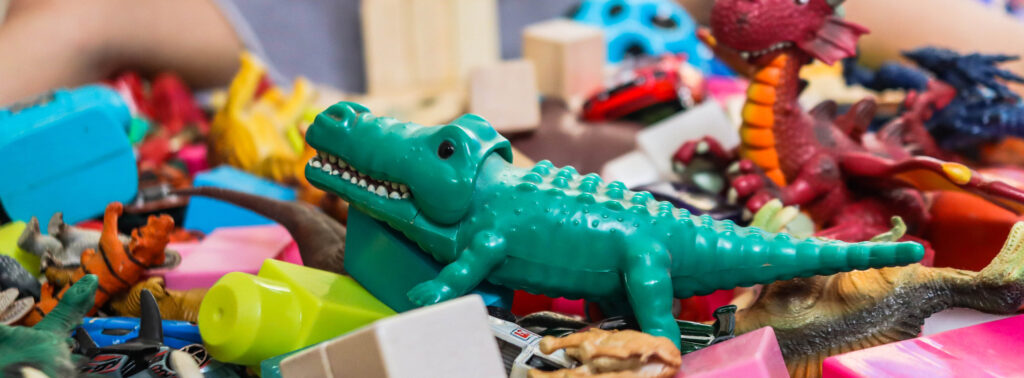
Hidden Dangers in the Toy Box: The Toxic Truth About Plastic Toys
“We do not inherit the Earth from our ancestors; we borrow it from our children.”
Native American Proverb
Imagine watching your child giggle on the living room floor, surrounded by a rainbow of shiny plastic toys. Their tiny hands reach for colorful blocks, squeaky ducks, and dolls that promise endless joy. But did you know that some of those bright treasures may be quietly leaching harmful chemicals every time your child plays, bites, or cuddles them?
We’re living in the world of toxins and children’s toys are not excluded. And in recognition of National Safe Toys and Gifts Month in December, read on for how you can protect your child from their hidden risks.
The Plastic Playground We Don’t See
Walk into any toy aisle today, and it’s like stepping into a carnival of color: glossy reds, sunshine yellows, sparkling blues. Plastic toys dominate store shelves because they’re lightweight, durable, and cheap to produce. From building blocks to bath toys, nearly every child owns a basketful.
But here’s a thought: if these toys could talk, what would they say about what’s inside them?
Many would whisper secrets about toxins: chemicals added to make them flexible, shiny, or long-lasting. Some of these substances can quietly migrate from the toy into a child’s body through touch, mouthing, or even simple exposure over time.
Just as a few drops of ink can tint a clear glass of water, a tiny amount of these chemicals can affect a growing child’s delicate body systems, especially their brain, hormones, and immune defenses.
Why Are There Toxins in Toys at All?
It seems almost unbelievable: why would harmful chemicals be in children’s toys? The answer lies in how plastic is made.
To turn hard, dull plastic resin into soft, colorful, and bendable toys, manufacturers often mix in additives like:
- Phthalates – chemicals that make plastic flexible.
- Bisphenol A (BPA) – used to harden plastics and create clear finishes.
- Lead and cadmium – heavy metals sometimes found in paint or pigments.
- Flame retardants – chemicals added to reduce the risk of fire.
Each of these have a specific industrial purpose, but none were designed with your toddler’s safety in mind.
According to numerous child-safety studies, these substances can act as endocrine disruptors, meaning they interfere with hormones. Hormones guide everything from growth to mood to metabolism, so disturbing that balance during childhood can have long-lasting effects.
The Usual Suspects: Understanding Common Toxins
Phthalates – The “Softeners” with a Dark Side
Phthalates make plastic toys squishy: that rubber ducky or teething ring owes its softness to them. But they don’t stay locked inside the plastic; they can leak out over time.
According to Eco-Healthy Child Care, a national program with the core focus of improving environmental health in child care facilities, phthalate exposure is linked to developmental and reproductive issues, such as early puberty in girls and decreased fertility in boys later in life.
Imagine a balloon that slowly leaks air through tiny holes: that’s how phthalates escape from toys into your home environment.
Bisphenol A (BPA) – The Shiny Chemical
BPA helps create clear, hard plastics used in sippy cups, toy bottles, and even toy food containers. The problem? BPA mimics a hormone in our body called estrogen. Even in small doses, it can trick the body into thinking it’s receiving real hormonal signals, leading to issues in brain development, behavior, and metabolism.
Thankfully, many manufacturers now label products “BPA-free,” but that doesn’t always mean “chemical-free.” BPA substitutes, like BPS and BPF, may carry similar risks.
Lead and Cadmium – The Unwanted Colors
Lead-based paints were banned in toys in the United States decades ago, but imported or counterfeit toys sometimes still contain them. Lead can damage a child’s nervous system and impair learning and memory. Cadmium, another heavy metal used in pigments, can affect kidney and bone health.
Think of lead exposure as an invisible graffiti artist: leaving permanent marks on a child’s developing brain that no eraser can fully remove.
Flame Retardants – Fire Safety or Chemical Cloud?
Some soft plastic toys and stuffed animals are treated with flame-retardant chemicals to reduce flammability. Unfortunately, these compounds can accumulate in the body and may disrupt yet another hormone in our body called thyroxine. This hormone helps regulate our metabolism and growth.
In small amounts, flame retardants might seem harmless, but remember, kids spend hours each day playing, cuddling, and even sleeping next to their toys.
How Toxins Enter a Child’s Body
Children explore the world with all their senses. They squeeze, lick, bite, and hug their toys. Because their bodies are smaller and still developing, even minimal chemical exposure can have outsized effects.
Here’s how the toxins sneak in:
- Through the mouth: Babies and toddlers often chew on toys. Chemicals like phthalates and BPA dissolve in saliva and enter the bloodstream.
- Through the skin: Oils and sweat can draw out surface chemicals, especially in soft rubber or vinyl toys.
- Through the air: Microscopic plastic particles or chemical vapors (called off-gassing) can be inhaled, especially in newly unpacked toys.
Once inside, these chemicals can accumulate in fatty tissues or interfere with organ development: a slow, quiet intrusion that parents can’t easily see.
The Global Concern
According to the United Nations Environment Programme (UNEP), every year, 19-23 million tons of plastic waste leak into our water ecosystems, contaminating lakes, rivers, and seas.
The omnipresence of plastic is so scary that it also infiltrates our daily foods and beverages, marking it a serious red flag that warrants further inspection. If you want to learn more about the pervasive nature of plastics in our everyday resources and ways to minimize risk, check out our previous blog.
But circling back to childhood toys – even those that look eco-friendly, with their soft vinyl textures or bright green plastics, can quietly carry the same harmful chemicals if regulations aren’t strictly followed.
Organizations like the Environmental Working Group (EWG) continue to advocate for stronger international standards and better testing of imported toys.
What Can Parents Do?
- Choose safer materials: Opt for toys made of wood, natural rubber, or food-grade silicone. These materials tend to be more stable and contain fewer additives.
- Check for certification labels: Look for marks like ASTM F963, CE, or EN71, which indicate that the toy meets certain safety standards.
- Wash hands after playtime: Encourage handwashing, particularly before eating. It helps reduce accidental ingestion of residues.
- Be wary of cheap imports: Low-cost, unbranded toys sold online or at street markets are more likely to contain unregulated materials.
These small steps can make a big difference. Remember, safety doesn’t mean depriving your child of fun – it means ensuring their playtime builds memories, not risks.